- Directional control valves enable operators to channel hydraulic fluid along particular directions providing actuators with the desired motion such as cylinders and motors.
- The contemporary valves are designed to resist pressures, temperatures and environment conditions that are extreme and thus can be used in heavy industry purposes.
- Higher designs like the monoblock hydraulic directional control valve will save time by making installation and maintenance less complex and will reduce down time.
- Valves that are chosen and taken care of properly will guarantee that the fluid flow is smooth and this in itself will enhance the overall performance and the life span of the system that uses hydraulics.
The modern industrial processes are supported by hydraulic systems which provide accuracy in the control of machines to move heavy loads, execute some delicate work or execute complicated tasks. Hydraulic directional control valves are among the most important parts in these systems. They are the controllers of hydraulic fluid and they dictate the flow of the fluid and how machinery functions correctly, safely and efficiently.
Understanding Hydraulic Directional Control Valves
A hydraulic directional control valve is a machine that controls the flow of hydraulic fluid in a system. It decides the direction the fluid will take and hence, the movement of hydraulic actuators. As an example, in a hydraulic cylinder, a directional control valve determines whether the piston will move out or move in and the work will be accurate and responsive.
Directional control valves are categorized into a number of types which include spool valves, poppet valves and the relatively new Monoblock Hydraulic Directional Control Valve. Both types have their varied applications and it is normally the Monoblock valves that are usually preferred as they are compact in design, highly reliable and have reduced maintenance requirements.
What Is a Monoblock Hydraulic Directional Control Valve?
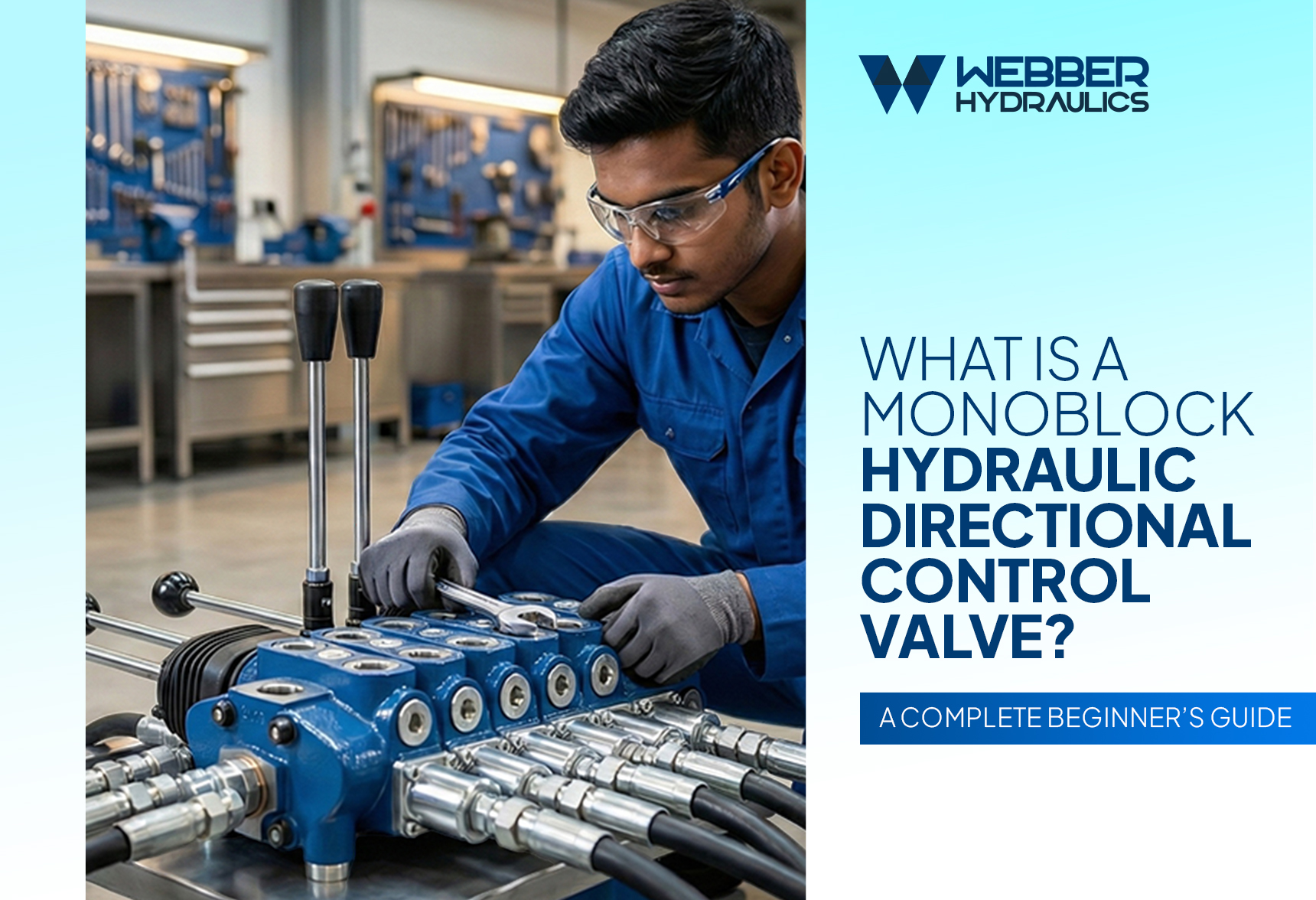
A monoblock hydraulic directional control valve is a relatively small and easily portable single body type of valve that directs the flow of hydraulic fluid in a system. It also regulates the on, off and flow of fluid to drive a cylinder or a motor. It is very popular in industrial hydraulic, agricultural and mobile machinery applications due to its durability and ease of use.
Features and Benefits of Monoblock Hydraulic Directional Control Valve
Monoblock Hydraulic Directional Control Valve is not created using several parts interconnected with each other. The design has a number of strengths:
- Compact and Space-Saving Design: This is perfect in systems that have fewer space requirements and it also requires less complex piping.
- High Pressure Handling: Is capable of working at higher pressures than customary sectional valves and therefore can be used in hard working applications.
- Less Leakage: The connections are less and hence less possible leakage points increase reliability of the system.
- Reduced Complexity in Maintenance: As an integrated structure, maintenance and inspection is quicker and less common.
- Enhanced System Performance: These valves reduce internal losses, which enables the flow of fluids more smoothly, enhancing productivity.
Due to the heavy machinery, automated systems or mobile hydraulic equipment, industries are making a reliable selection with this hydraulic Directional Control Valve balancing its performance, durability and efficiency.
Choosing the Right Hydraulic Control Valve
The damaging hydraulic control valve is vital in ensuring the optimum system functioning. Some of the key considerations include the following:
- Flow rate and Pressure Requirements: Ensure that the valve can handle maximum pressure and flow requirement of the system.
- Application Type: Determine whether the valve will operate with a single actuator or a series of actuators.
- Environmental Conditions: Take into account the temperature, humidity, dust and other external conditions as it may affect the performance of the valves.
- Control Method: Choose between solenoid-operated/pilot-operated controls depending on the requirements of the operations to be controlled.
- Credible Supplier: A reputable hydraulic equipment manufacturer will ensure the supply of quality components and after sales services. Renowned companies offer strong and high performance valves to industries.
Applications of Hydraulic Directional Control Valves
Hydraulic directional control valves are flexible devices, which are applied in a variety of industries:
- Construction Equipment: Excavators, cranes and loaders are instruments which operate through directional control valves to control their movements.
- Agricultural Machinery: These valves are applied on tractors, harvesters and sprayers to manage the instruments like increasing their safety and operational efficiency.
- Industrial Automation: These valves are used in the production of presses and robotic arms and assembly equipment.
- Material Handling Equipment: Forklifts, conveyors and lift systems make their movements with directional control valves, which makes it safe and efficient.
When choosing the correct valve among trustworthy hydraulic equipment manufacturers, one can be sure that the work will go well and there will be minimal chances of spending money in the downtime. Reliable suppliers such as Webber Hydraulics do not only offer quality items, but also expert guidance on the selection, installation/maintenance.
Maintenance Tips for Longevity
Proper maintenance is the key to the prolonging of the service life and the functioning of hydraulic directional control valves:
- Frequent check- up: Check to see that there are no leaks, strange sounds and that actuators are operating properly.
- Clean Hydraulic Fluid: Impure fluid may destroy parts of the valves and thus filtration and quality of the fluid is of the essence.
- Lubrication: It is necessary to maintain moving parts and seals in good condition by following manufacturer guidelines.
- Check Connections: Check the fittings and ports to make sure they are not allowed to lose fluids.
- Professional Servicing: You can get certified technicians to inspect and service the valves on a regular basis and especially when the usage is critical.
These directional control valves can be used to provide several years of service with the proper maintenance to reduce unexpected downtime and improve the overall performance of the system.
Final Thought
To conclude, the partnership with the renowned hydraulic equipment manufacturer like Webber Hydraulics ensures the presence of quality valves, expert help and consultation regarding installation and maintenance. By using the right choice of the valve, acting appropriately and choosing the reliable supplier, the companies will be in a position to improve the efficiency of the business.
FAQs
What is the distinction between a monoblock hydraulic directional control valve and a sectional valve?
A Monoblock valve is a single, combined, unit that minimizes possible leakage points and space needs whereas sectional valves are modular, effective in being programmed to a variety of functions, but may need additional maintenance.
What is the correct hydraulic control valve to select?
The flow rate, system pressure, environmental conditions, control method and reliability of the manufacturer are just some of the factors to consider. The most suitable suppliers are able to give professional advice to be selected best.
Are hydraulic directional control valves repairable or should they be replaced?
Most of the minor problems, including damaged seals, can be fixed. Nonetheless, a serious breakage of internal parts can lead to their replacement. Constant check and servicing are used to avoid major breakdowns.